Tuesday, March 11, 2014

Archiving a Collection

Cataloging

From my time working in a gallery and my years spent wandering the Art Institute, the act of collecting is something that has come to be of great interest to me. Upon reflection, I don't consider myself to be a collector of anything. I didn't collect Beanie Babies, I don't really possess an art collection, and my eclectic mix of records wouldn't be considered worthy of the title "collection" to many music aficionados. And yet, I am drawn to collections. Collections that might not be my own have made their way into my life by way of lists. For you see, I am truly a list-maker.

One of my first projects at the Art Institute was to create a list of all living descendants of donors to the precious Thorne Miniature Rooms - a strange and fun challenge, given that the Thorne Rooms were so important to me as a little girl. I worked on this project diligently tracking down little histories of former donors finding interesting stories (one descendant bred miniature horses!), but also finding dead ends where questions would always be left unanswered.

What I took away from that project was that cataloging things comes naturally for me, regardless of what it is I am working to catalog. Which has led me to an exciting new project I'm pursuing in my free time. I'm currently working to organize, archive, and catalog a collection of photography for a dear family friend and great talent, Herb Nolan. My first visit to his home and studio was this past Saturday, and the work I encountered spanned decades, themes, subject matter, and location broadly and with grace. We whittled down the collection into genres that "made sense," piling photograph after photograph into the proper location based on theme and size. As we moved through the collection, Herb reminisced on memories and moments from an era long since past, and yet, the photographs rich in contrast and intimate in manner perfectly evoked the feeling of the time and place he so beautifully captured.

We only scratched the surface with our preliminary work on Saturday, but ideally an exhibition is in the works. Stay tuned! 

Tuesday, March 4, 2014

The Grand Budapest Hotel

GPOY - Waiting outside of the Music Box in the snow edition
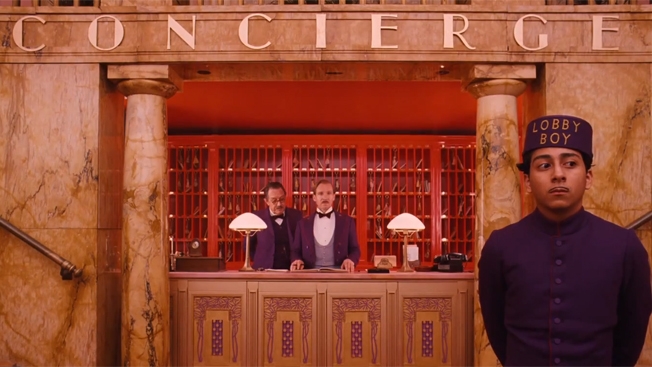
On Saturday, we anxiously waited in line outside of the Music Box Theater in 20 degree snowy weather, not because we were lunatics, but because we wanted to attend the VIP sneak preview of The Grand Budapest Hotel and see Wes Anderson in person! It was cold, I mean really cold. I was one of the lucky few to nab an RSVP to this impossible-to-get-into event, and while I hated the way my toes felt after an hour and a half of jumping from foot to foot in the cold, I'd say some icy toes were an even trade to be in the same room as Wes Anderson, Roman Coppola, and Tony Revolori, the boy wonder of this film. We killed time sipping chai from Julius Meinl, making up games, trying to read each others' minds, and befriending everyone else in line with us. It was an awesome experience to share with a crowd of Wes Anderson devotees, and I will not soon forget it.

The movie was wonderful, and as rich and colorful as one might expect from Anderson. What differentiated this film from the rest of his oeuvre was the darkness of the story and some of the gruesome moments that caught me off guard. No spoilers, I promise. I will just say that seeing a gory decapitated head and little nubby cut-off fingers was shocking and surprising, adding an element of thrill and horror to the film that was lightened by humor, wit, and beautiful editing. 

What I loved about this film was that Anderson decided, much like he did with the Darjeeling Limited, that he would base his film around a location and moment in time, imbuing the story with the very nature of its surroundings. In prepping for the film, he visited Germany and Budapest, and shot a majority of the movie on site (aside from the adorable animated / sculpted moments). The whole movie was true to the Wes Anderson Universe, but steeped in a different era of nostalgia than so many of his other films take place. 

Was it my favorite Anderson film? Not entirely, but it still invited me to visit his magical mind, basking in the richness of texture and color, allowing me to hunt for details and common threads in all of his films, as if to unlock so mystery of the characters and stories he so lovingly weaves for my viewing pleasure.

Wes, you did it again! Bravo, darling, bravo!

Wednesday, February 5, 2014

Being an "Art Worker"

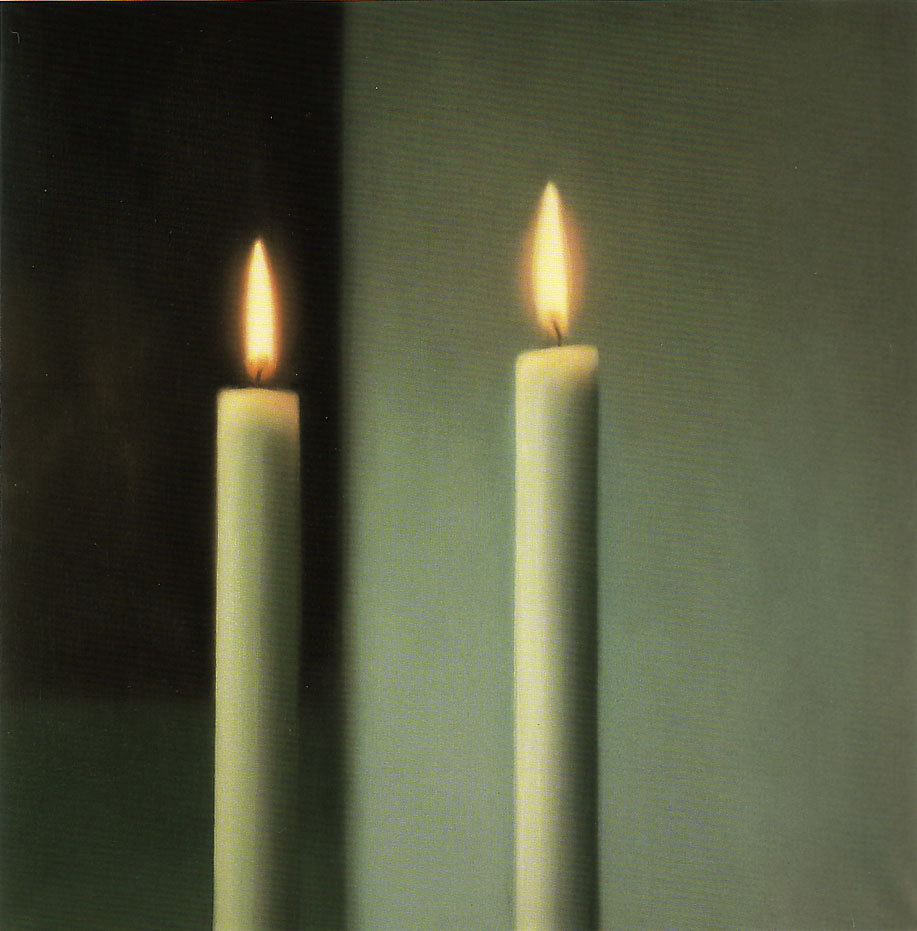
Gerhard Richter, Two Candles, 1982.
via Cave to Canvas
When I parted ways with the Art Institute, I firmly believed that I didn't need to work in the arts to be close to the arts. That I could pursue my passion for art in ways that were different than my career choices, opting to try a line of work, though still related to fundraising, that was not so closely aligned with my true passion for arts and culture. Reflecting on my last five months in my current role as a researcher at a consulting firm, I have gleaned, that a big part of me is yearning to assume my place in the art world. Lately, I find myself happiest when I am reading about art / exhibitions, viewing art / exhibitions, and talking about art / exhibitions. It has become so clear to me that my passion for art cannot be snuffed out.

So how do I negotiate this you ask? I can't exactly pour ashes over the fire and turn my back on what I know makes me happy - that's not my style. As my father likes to say, "Guttmans never quit" - and ain't that the truth? Rather than walk away from a piece of me that is flickering within my core, I am slowly feeding my burgeoning flame the kindling it needs to grow into a sweltering hot house that was the Great Chicago Fire, that is my alma mater's mascot, the Prairie Fire, and that maybe one day could be the flame of my future.

How I negotiate this yearning, this aching desire, is up to me. Lately, I've been pursuing art in my spare time. Visiting art openings around the city, taking my time when I walk through museum exhibitions to read every didactic plate, attending artist lectures, and reading every article the Internet has presented me (kids crawling on Donald Judd sculptures, Obama hatin' on Art History majors, the Molly Soda art appropriation "scandal") knowing full well that I am on my way to attaining fulfillment in my work with every effort (big or small) I make to get closer to this thing I love so intimately.

I attended a talk last night, given by the curator and "art worker," Dieter Roelstraete of the MCA. His discussion of the art world in terms of status gave way to the idea of those in the art world as being "art workers" or "art laborers" - that every role is important. From artist, to curator, to critic, to viewer, each role needs to work in tandem with another. That art cannot exist without the viewer, that the curator and critic cannot exist without the artist, brings about the point that the art world, while driven by status, is actually driven by the symbiotic relationship of these "art workers".

A person plainly asked him, how does one become a curator? To which he quite candidly responded:
One must take in a broad range of experiences. To learn to curate is a practice in looking. See as many exhibitions as you can, take stock of what you see.

So here I am. Pursuing the art world from the "outside" working my way back in. Initially as a viewer, maybe a small part as an artist, and one day as curator and critic. I savor ever moment I have with a work on view, cherishing the experience for the singularity of it. Reflection on viewing is part of attaining fulfillment for me, and I have a feeling my reflections have only just begun.

Sunday, April 8, 2012


I have been putting off watching Martha Marcy May Marlene for far too long. I think I procrastinated in part, because I was told that this film is really disturbing, and to prevent myself from having self-anxiety created nightmares, I decided that I didn't want to watch it alone, and I definitely didn't want to watch it in the dark. I know, I'm crazy. I put off watching this movie for very silly reasons, stemming from my own difficulty to separate fiction from reality. I'm nuts. But what's worse is, I had nothing to fear, you see, because I am friends with people who worked on this movie. That's right, I put off watching a movie because I was scared of being disturbed by a fiction that was put together by people I am friends with. Who am I?

But enough of my inner-monologue, let's get down to the brass tacks.

Martha Marcy May Marlene was a real treat. Visually speaking, I was immediately drawn in to the expansive landscape of the Catskills. I wanted Martha's seemingly free spirit. The ability to skinny dip and jump off of cliffs into cool pools of water. The simplicity of her cutoffs and bruised legs. Her hair. I wanted to quit my job, live off of the land, maintain self-sufficiency, become a part of a different kind of community. Initially, it all looked so good, so tantalizing, so ideal. But as the story unfolds, things aren't as they appear. And what worked so well about this film was the way in which we the viewer are handed the story - in a way that helps us to determine what happened, even though the "facts" are coming from a character that we can't necessarily trust.

There were a few things that helped for me aided in the success of Martha Marcy May Marlene. For one, the cast was the perfect size, and this resulted in a true feeling of community within the story that lent itself beautifully to a film about a cult commune. There were no distractions. The styling of the characters was simple. There weren't too many details. I never found myself confused or asking questions. I found myself absorbed in the story, wondering what happened to Martha that left her with such a heavy case of PTSD. I found myself eating out of the palm of the cult leader Patrick's hand, only to feel the same betrayal and fear that Martha felt with the turn of events. I never once felt sorry for any of the characters - this film has a lot to do with decision making. With the very definition of right and wrong. And with the ideals and values which various communities are based. It's scary to think that no matter where we end up, or what kind of community we choose to subscribe to, there are always flawed ideologies in every system.

In the end, I wound up watching Martha Marcy May Marlene in the dark, alone, and wound up having nightmares, waking up drenched in sweat. The next day, I went to work, but for the first time in a long time, I felt like I was just going through the motions. Maybe what terrified me wasn't the brainwashing, the violence, or the paranoia of this film, but rather the reality of existing in a complex and rich society that is truly laden with it's own set of brainwashing, violence, and paranoia - 21st century America.

Thanks Brett and Esther, for bringing this movie to me and to the world! You two are wonderful, creative and an inspiration!

Saturday, December 17, 2011

Warhol at the Frist

Back in August I made a weekend getaway to visit a girlfriend outside of Nashville, Tennessee. After an early morning flight, we stopped for pancakes and coffee, before swinging by the Frist for their exhibition Warhol Live: Music & Dance In Andy Warhol's Work.

I really enjoyed this show because it was completely accessible. You need not know a thing about Warhol, Pop Art, or music and dance to be able to move fluidly and confidently through the galleries. The show was approachable and open - with gallery spaces bleeding into one another through the use of music playing intermittently. Films were projected on walls, couches appear for lounging, a silver clouds room was created to stage a screening of a Merce Cunningham performance, and a space was designated to recreate an Exploding Plastic Inevitable show (ie Factory era early Velvet Underground performances).

I had a lot of fun, and was happy to have a chance to play in the Silver Clouds and excited to view a clip from Horse (1965), a film I went to the Warhol Museum to view for my thesis. I even managed to sneak a picture with the clouds!!
   warholfristsilver clouds

Thursday, November 17, 2011

Gainsbourg: A Heroic Life / Gainsbourg (Vie héroïque)

In October I had the opportunity to attend a sneak preview of the film Gainsbourg (Vie héroïque) / Gainsbourg: A Heroic Life at The Music Box Theater. The film was a whimsical interpretation of the biography depicting the life of the artist and musician, Serge Gainsbourg. Written and directed by the graphic novelist Joann Sfar, the feature film reads much like a contemporary graphic novel, combining elements of fantasy and non-reality with the harsh truths of history that intertwine with Gainsbourg's biography and larger-than-life rock star persona.


Let me begin with a statement of both fact and opinion regarding tastes:
If you like French films, you will like this.
If you like films set in the 1960's, you will like this.
If you like French films from the 1960's, you probably won't like this.

There is something about Gainsbourg (Vie héroïque) that felt incredibly French. Yes, it was made by a French artist/director/filmmaker, and yes, a majority of the movie took place in France. So naturally, it should feel French. But what solidified the française feel wasn't in the set or plot, but in the way things pan out for the people in the story - a sort of effortlessness that goes into leading a charmed and fulfilling life. Beginning in Paris in the late 30's, the story shows Gainsburg, then known as Lucien Ginsburg, a young boy dealing with the mingling issues of adolescence, coming of age, struggling to learn to play piano, Nazi occupation, and just plain being a boy. As a means of grappling with his day-to-day dilemmas, Ginsburg uses his imagination to escape the mundane and begins to question his sense self. Creating an alternate personality known only as his "mug", which acts as both his voice of reason and his inner demon.

Gainsbourg's "mug", a whimsical puppet via source
The issue of identity is the driving force of this film as Gainsbourg struggles to understand himself as an artist and musician by the means of reinventing himself. Like the great Cubists working in France at the turn of the 20th century, Gainsburg's persona is fragmented to the core. With pieces of his childhood-self coexisting and intertwining with his contemporary being. In order to assert his identity, Gainsbourg uses the tools of  fashion, music, visual art, and charm as a means of defining himself as a musician and artist - much like Andy Warhol did in the late 50's in New York. With his reinvention, Gainsbourg finds a woman to shape him and stand in as his muse, including iconic beauties like Brigitte Bardot and Jane Birkin. And with each reinvention of the self comes a new musical styling, ranging from the structured jazz of elite night clubs, fun French new wave pop, raunchy spoken word epithets of sex, rock, and drugs, to his later islander inspired tunes recorded in Jamaica.

Gainsbourg and Bardot collaborating in a charming musical number via Music Box Theater
What makes this film work is the cohesiveness of the many different versions of Gainsbourg that fill the space of the story. The youngest Ginsbourg played by the delightful Kacey Mottet Klein is both a young man and an old soul wrapped into one. He prophetically smokes cigarettes like the man he is to become, and flirts with woman regardless of age or beauty. The adolescent through aged Gainsbourg skillfully played by Eric Elmosnino carries the film from decade to decade. Elmosnino perfectly evokes the Gainsbourg of each new personal creation, tapping into the charm, wit, and inner-turmoil that the musician carries with him. Gainsbourg: A Heroic Life acknowledges Gainsbourg’s womanizing through depictions of his affairs and marriages, but it depicts him in a humane and honest way, attributing his imperfections to his lack of identity – giving the viewers a better understanding of the man he was, a man of great talent spurred from the great heaviness of becoming and being Gainsbourg.
Eric Elmosnino as Gainsbourg via source

Friday, August 19, 2011

The Future


Last Monday I met up with a few gal friends at The Music Box Theater to see Miranda July's The Future, and damn was it good. MJ has gotten a lot of press about this movie, some of which has been less than complimentary. It seems as though she has been lumped into the twee and indiexcore of film making, and after the acclaim that Me and You and Everyone We Know recieved, it seemed inevitable that critics and filmgoers alike would have impossibly high expectations.

I read every article, every blog, and every review I possibly could before seeing this movie which prepped me emotionally, if you will. A lot of reviewers were turned off by how serious this film was, excpecting something light, humorous, and full of the kind of whimsy that we associate with July's films. But as an avid supporter of her work, I was excited for July to take her film making, directing, writing, and acting in a completely different direction.

What I loved about this movie were the subtle differences and choices that July made in relation to Me and You and Everyone We Know. I know, as a critic, doing the good 'ol fashioned compare and contrast is a total copout - but seriosuly, after giving this movie a week of marinating in my analytic brain, I found some really interesting connections.


1) The Bildungsroman ie Coming of Age Story - Where Me and You and Everyone We Know was a coming of age story from the perspective of an aspiring artist, a separated single parent, a teenage boy, and a young child - The Future was also a coming of age story. A couple finds an injured stray cat, lovingly named Paw Paw.  They bring it to the vet, and then decide to keep him, knowing that he probably won't live very long. They go to get Paw Paw, and the vet tells them it needs to stay for a month - but following the wait, the cat could probably live for 5 years plus. This deadline of five years jolts the couple into asking questions such as "Where am I now?" and "Who will I be in five years?" - with an especially poignant line in which Jason, played by Hamish Linklater says, "I thought I'd be smarter".


Jason and Sophie then embark upon an exciting and nearly impossible goal to get out of their mid-thirties malaise and achieve endless goals over the course of the next month until they pick up Paw Paw, whose voice is played by July. Sophie and Jason quit their jobs. Sophie chooses to try to choreograph 30 dances in 30 days, Jason tried to save the planet, canvasing with the message the the world can be made better one tree at a time. Over the journey of the film, Sophie and Jason discover things about themselves and their future finding that their expectations and goals have not been met in fulfilling or satisfying ways. This Bildungsroman is a sadder one than that of the precurser film, but important nonetheless.

2) The Moon - Where Me and You and Everyone We Know is very much about the Sun and daytime, this film focuses centrally on the Moon and nighttime. The moon in fact plays a central character for a portion of the film, offering wisdom and solidarity to Jason in a time of need.

3) The Colors - Me You and Everyone We Know features bright bubblegummy neons that are so sweet you can almost taste them - total and complete eyecandy. July made a conscious effort to pick a completely different color palette for this film, picking rich ochres and jewel tones. The previous movie is light and hot, whereas this one is dark and cool. Interesting how something as simple as color can be so effective at setting up a mood for an entire film. Fun fact: Miranda July picked out the palette for The Future by laying out a set of pens from the Muji store and picking out the colors she was drawn to. Read about it here.
from Me and You and Everyone We Know
 
Picking out colors for The Future
 
The Future is currently screening at The Music Box Theater and will be opening at locations today all over the country. If you want to see a serious, thoughtful, and beautifully made film, I urge you to check this one out. I might even try to see it a second time while it's still playing on the big screen.
m